Local SEO
 Social Media
 Web Development
 Content Writing
 Web-hosting
Why Search Engine Marketing Matters
1) The Real Definition of Search Engine Marketing
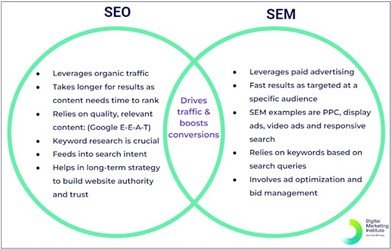
Oftentimes, SEM is mistaken for being too complicated and hard to follow. However, in reality there are only two core things that sums up SEM as a whole;- Paid Search (PPC advertising):It is the practice of purchasing exposure on websites such as Google Ads to rank highly in search results.
- Search Engine Optimization (SEO): Enhancing your website to allow search engines to naturally crawl, index, and rank your pages is known as search engine optimisation, or SEO.
2) The Need for SEM Today
Here’s the truth: intent drives search.
When people type something into Google, they’re telling you exactly what they want. That makes search traffic some of the most qualified traffic any business can get. Ignoring SEM means letting your competitors scoop up those high-value clicks.
SEM matters because it:
- Matches your product or service toreal customer demand, no guesswork.
- Reaches people when they’re ready to act, not just browsing casually.
- Provides measurable outcomes across multiple channels.
In America, where consumers rely heavily on search engines to make buying decisions, that’s critical.
3) PPC and SEO: More Effective Together
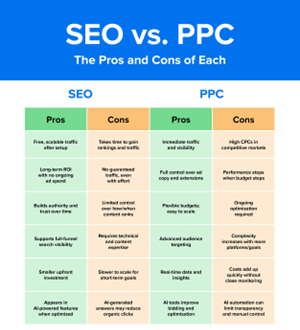
Consider PPC as a light switch and SEO as compound interest. Over time, SEO reduces your blended acquisition cost, increases authority, and gains ranks. PPC allows you to test messaging rapidly, fills in the gaps where you do not yet rank, and offers you instant reach. When they collaborate:
- SEO content priorities are informed by PPC keyword information.
- SEO title tags are strengthened by material from PPC headlines that converts well.
- Organic winners shift the budget to new prospects by reducing paid coverage on those terms.
- Visitors who came via organic search but did not convert on their initial visit are remarketed to.
As a result, there is less waste and covering throughout the whole trip. See our blog SEO vs PPC for more details
4) Aiming for Genuine Intent (Demographics Only)
Traditional advertising asks: Who are you? Search engine marketing asks: What do you want right now? That’s a powerful difference. Search queries reveal intent layers that marketers can target with precision:- Informational:“how to fix a leaking faucet”
- Comparative:“best plumber near me”
- Transactional:“Dallas emergency plumber open 24/7”
- Brand-specific:“Smith & Sons plumbing reviews”
- Blog posts and FAQs for research.
- Comparison guides for decision-making.
- Landing pages designed for conversion when the buyer’s ready.
5) Setting a Budget and Showing ROI
One of SEM’s biggest strengths is its flexibility. Keep certain things in mind though, start small, pick things up fast, then scale what works. A straightforward budget strategy: To prevent competitors from stealing your name, protect your brand keywords with a little daily investment. Include high-intent non-brand phrases that are already converting through other channels or naturally. Every month, test expansion terms using stringent match types and high bids. Allocate funds to the keywords and ad groups that offer the best cost per sale or cost per lead. What makes SEM so powerful is its measurability. Every dollar spent produces data: clicks, impressions, conversions, and even lifetime customer value. That means you can continuously refine your campaigns and prove ROI with clarity.6) Landing Pages That Produce Real Results
Even the best ad campaign can’t rescue a bad landing page. Each click needs to take the user to a page created specifically for that task. Pay attention to:- Message match: the promise of the question is reiterated in the headline.
- Give a clear explanation of what the visitor will receive and why.
- Simply said, just ask for what you really need.
- Speed: PC and mobile devices load quickly.
- Trust: testimonials, certifications, assurances, and concrete evidence.
- One main call to action that is evident without scrolling is the next step.
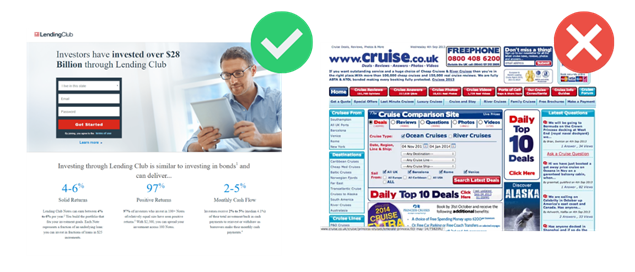
Here are the Top 10 Landing Page Statistics for Better Conversion
7) Relevance and Quality Score
The Quality Score in paid search indicates how pertinent and helpful your landing page and ad are for a given term. Better positions at reduced expenses are earned via more relevance. Enhance it by:- Similarly comparable keywords in tight ad groupings.
- Advertisements that utilise those keywords’ identical wording.
- Landing pages that provide an instant response to the query.
- Reduced bounce rates and faster pages.
- Relevance and quality are not “nice to haves.” they make the difference between costly experimentation and successful advertising.
8) Essentials of Local SEM
Local search is frequently the primary source of income for service areas and storefronts. Priorities: Claim your Google Business Profile and fill it out with the correct services, hours, and categories. Encourage evaluations and give detailed responses rather than general ones. Make use of call and location extensions in advertisements. Create location pages with actual photographs, neighbourhoods, and directions. Target bids at the ZIP code or radius level, then reallocate funds to the areas that convert the best. Local intent transforms fast. Concisely and conveniently meet it.9) E-commerce notes and product advertisements
If you sell products, prioritize feed quality. The effectiveness of shopping is influenced by appropriate names, qualities, and visuals. Sort products based on seasonality and margin to increase your offer on lucrative things. Utilise Shopping’s search phrases to inform FAQs and SEO category material. Keep the checkout process simple and include trust-building features next to the pricing and “add to cart.” Your conversion rate will be higher if there are fewer choices at the moment of purchase.